Wednesday, 16 October 2013

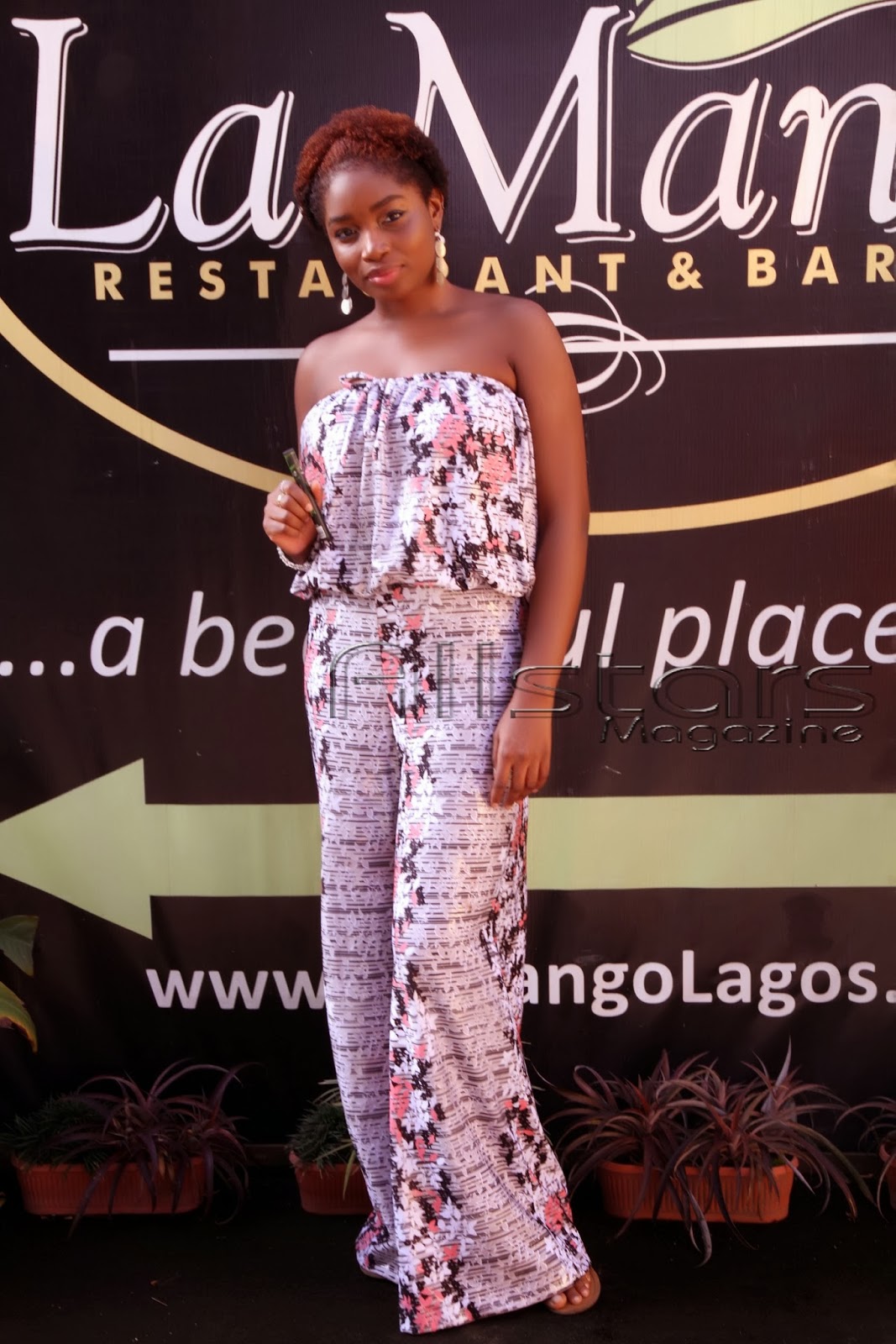
Emoshi/La Mango pool party


The Emoshi/La Mango pool party was the gist making waves before and after the party. Emoshi also known Ehookah is the new guilty-free pleasure cigarette in town. The Emoshi is a japanese name for cigarette. The difference between Emoshi and other cigarettes is that it does not have nicotine/non-addictive and its stylish/classy/urban for everyone above the age of 18. The pool party which took place at the upscale and exclusive La Mango bar in GRA Ikeja Lagos had Ill Rymz as the MC/host of the day. Among the celebrities and artistes present were Eva, Terry Da Rappman, Melvin(BBA), Dipp, Uche, cityfm crew, Mnet Crew, on air personalities and lots more. Surely its a party to remember!


Monday, 14 October 2013

Devon And Jordan's Wedding Is the Latest Emotional Gay Wedding Video

And maybe you've started to think you've seen one, you've seen them all, but this video of Devon and Jordan's wedding is well worth the viewing.
The video opens with some emotional wedding vows that will definitely have you reaching for the tissue box.
Congrats to the happy couple!

Great Gay Viral Videos
1 of 15
Courtesy of CollegeHumor

Fashion archive: Suddenly, black models are everywhere

17 September 1990: Is demand for Naomi Campbell and other black models evidence of greater diversity in the fashion world or just a fad?Naomi Campbell

Naomi Campbell modeling at the Yves Saint Laurent 1999 spring/summer show in Paris. Photograph: Michel Euler/AP
Open the pages of Italian Vogue, American Harpers, British Elle in fact any fashion magazine you care to mention and you will see them. Leaping across sunburned Arizona desert roads, stretching impossibly long limbs, gazing off into the near distance with pensive, unattainable stares, black models are suddenly everywhere.
These aren't the pale, European-featured black models of five or so years ago. These are real black girls.
A handful have even made the leap to supermodel status where you become a face and a name. There's the American Karen Alexander, who Vogue described as 'a fragile long-necked beauty'. There's the 6ft 2in Sebastian who Harpers & Queen recently referred to as 'looking more like a champion hurdler than a clothes horse'. And then there's Naomi Campbell.
Twenty-year-old Campbell, discovered while she was a teenager from Streatham attending the Italia Conti stage school, is now the international fashion world's personification of black beauty. Flick through your average international fashion glossy and what do you see? Photo of Naomi, advert, another photo of Naomi, advert, advert featuring Naomi, advert, article on short hairstyles featuring, yes, Naomi. Fashion designer Azzedine Alaia describes her as 'a tiny, divinely muscular boxer' though it is hard to imagine anyone who looks less like Barry McGuigan.
So beautiful is Naomi that she recently appeared on prime-time American TV in The Cosby Show, playing simply every man's idea of an impossibly beautiful college girl, yet this still doesn't explain why she occupies more pages in Italian Vogue than Gazza does in The Sun. Have fashion editors been belatedly taking a crash course in positive discrimination? Is it an extreme form of liberal white guilt? Never. Fashion editors are favoring black models because it's, well, fashionable.
According to Debbi Mason, former fashion director of Elle and now a top freelance stylist, 'The important thing to remember about the new popularity of black models is that it's a fashion in looks rather than a change in attitudes. It's linked with the idea of global fashion. At the moment, there's very much a fashion for mixed culture and putting eclectic things together, and I think black models emphasis that. It's just a fashion. It could have been big noses or long hair. It's like everyone going out and cutting their hair short.'
In fact black models have become so fashionable in the ad world that advertising people have taken to calling them GBCs - Groovy Black Chicks. Creative directors get them dancing away like something out of a Soul II Soul video in adverts for cashline cards or fashionable dance music album compilations.
Mason was at Elle in the mid-eighties when the magazine first booked Naomi Campbell. 'We had a lot of encouraging letters from black readers saying it was good, at last, to see black models used in the magazine,' she says. Today dark-skinned models with features so non-Caucasian that The Cosby Show would probably reject them are finding themselves welcomed with open arms in the fashion world.
Iman & Bethann Haridson Portrait ShootFormer models Bethann Hardison and Iman, 2013. Photograph: Mike Coppola/Getty Images
Lorraine Pascale, an 18-year-old recently signed to Models One in London, says, 'The situation is better than it has ever been. It's certainly a lot easier for black models working today. For some reason I get a lot of work in Australia at the moment I don't think that's because I'm black, but because there aren't very many models working down there.'
Adored though they might be by the fashion cognoscenti, however, black girls still don't get their fair share of magazine covers. Naomi Campbell has made it to the cover of British Vogue twice but, significantly, the first time was in long-shot rather than close-up and the second was a group portrait of four models. As Debbi Mason says, 'According to market research, black girls on covers don't sell and this is something I feel very sad about.'
At Cosmopolitan, editor Marcelle D'Argy Smith feels that this kind of conventional wisdom is 'very old thinking and out of date, like people going on about the suicide rate in Sweden.' Cosmo put its first black girl on the cover in 1973 and its latest one on the August issue. It has to be said, though, that black girls on the cover of Cosmo generally have their skin bleached out to a peanut butter colour, so they look not so much like black girls or even white girls, but simply Cosmo girls. And D'Argy Smith, while quick to point out that Cosmopolitan uses 'a disproportionate amount of black girls ', is equally quick to note that Britain as a whole is still 'bloody racist, a very racist society', compared with America where black models are far more numerous.
Irene Shelley, editor of the British black fashion magazine Black Beauty & Hair, tends to agree. 'We've seen changes in the way women's magazines use black models. Now they're used more just as other models would be used, instead of being plonked in there if you had a carnival fashion shoot. But we're still stuck with a lot of pictures of the stereotyped fashion magazine black girl you know, pale skin and long, flowing, corkscrew hair.'
THE FACT that Naomi Campbell is so visible, Shelley adds, doesn't mean there's necessarily been an explosion in the actual numbers of black models working. 'Most agencies can take only one or two on their books at a time, so the majority of black models end up working part-time at other jobs.'
Her opinions are borne out by fact. Of the 75 models on the books at the London office of Models One, an established model agency in the business for 25 years, only six are black. Five years ago that number was a grand total of one. And though girls are allowed to look black now, their hair, by and large, is still not. Black hair tends to be cropped very short, straightened or stuffed under straight, often blonde, wigs, to capitalize on the new sixties-inspired fashion. Even pop stars Janet Jackson and Jody Watley have stolen the look and appeared in American glossies sporting blonde Barbie-doll wigs, looking like modern-day Motown starlets.
Debbi Mason cautions that the sudden increase in the number of black models is no cause for the fashion world to congratulate itself. She predicts that numbers will decline when black models go out of fashion. 'It's quite interesting that at the moment you never see oriental girls in magazines. It's just not fashionable right now. But I'm sure there will be a time when it will be and suddenly we'll start seeing a lot of oriental faces.'
She feels, however, that the current fashion for using black models may go a small way towards changing the future long-term perceptions of beauty. 'In a way its like the hype surrounding New Age,' she says. 'You feel that something has to come out of it. Even if the motivation to begin with isn't right, it has to have a good effect.'
In September 2013, former models Bethann Hardison and Iman joined forces with Naomi Campbell to launch Balance Diversity, a campaign to promote the visibility of black models.

Slaving to Racial Stereotypes


2013-10-11-9866787964_8ab6c3bc6c.jpg

When was the last time you looked at yourself in the mirror and asked the question of yourself?
"Who am I?
It's a possibility that the first thing you're going to say is your name. Get deeper with it; what defines you as an individual? What you may consider as the definition of your existence may very well be different from what others define you as just from your outward appearance.
In the eyes of others, it will almost always be based upon your ethnicity -- if you're black then you are supposed to act, dress and talk the way society expects you to. If you're a black man or woman from the south then you're automatically lacking in intelligence; if you're a black woman you have an attitude or you're angry. You must listen to rap or hip hop music too, right? "Wait, why are you listening to Barry Manilow? You ain't black listening to that ish!"
This kind of thing happens all the time -- it's called racial stereotyping.
Ignorance prevails and it instills in us all that we should not have our own sense of individuality, but instead that we are expected to be identical to others whose skin pigmentation is the same as ours.
Everyday a black man or woman was approached for days, weeks and months after the 2008 and 2012 presidential elections with the following words or a slight variation; "Gee willikers, I sure bet that you're glad Obama won, aren't ya?"
It happened to me 12 times in a period of four days. Much less, these occurrences were all at my day job, which is in a bank where I am the only black man, in a high income community within Northern California that is roughly 95 percent Caucasian.
The standard and "polite" response would be one of three possibilities; "You have no idea how glad I am; it's time for a change!" Or; "Well, I actually voted for the other guy." The third option can be great fun for those of us who practice the use of proper English -- this means that we can simply placate the stereotypes by saying; "Hell yeah, nigga! I'm glad that nigga won! We finally got a nigga in office! Now it means a nigga like me can get a job! Yeah, nigga!"
Watching the facial expression of the individual you try the third option with is one of the most priceless moments that you'll ever have in life, this I promise you.
I don't know about you, my fellow readers -- but maybe it's the journalist in me, I always responded by asking a question that sadly most of us wouldn't have thought to ask but should have.
"What makes you think I voted for President Obama?"
In every single instance of the 12 times it was assumed that I voted for President Obama, I asked that question. In every single one of those times the person who made the assumption was of the Caucasian persuasion, the blood rushed to their faces, it's safe to assume that their palms began to sweat, and the not one of the individuals knew how to answer my question.
Pretty sad, huh?
Not just that it was automatically assumed that I voted for President Obama, but that it was assumed solely based on the color of my skin. None of these individuals knew anything of my religious or political beliefs. They saw a young black man, well dressed, and well spoken working in a service industry. In particular an industry that traditionally pays its employees quite shabbily. These are all things that would color me a Democrat, right?
President Obama had 97 percent of the black vote for the 2012 election. Why? Was it based off of his qualifications to get the job done? Was he the president that looked the coolest? Did we as black people vote for him because he was black and our friends, family, neighbors and co-workers voted for him?
Recent statistics show a sharp decline in the knowledge of civics and all things concerning American government in the U.S. So, if we as a society are largely not civically aware, then what is the real reason we elected President Obama to a second term?
Racial stereotyping can be and often is a two-way street. Sometimes we look at our own culture and find ourselves listening to types of music, talking a certain way, dating a particular type of man or woman, or even dressing in ways that don't truly define us as individuals. We cater to the stereotypes that society has affixed to us courtesy of the mainstream media.
It's important to realize that although we are black, we are still individuals.
As a community, we have lost sight of what being black truly is. We define being black as the way in which someone walks, talks, dresses, the music someone listens to, and the television and films that someone watches. If someone who is black does not conform to these stereotypical standards, they're accused of being whitewashed, gay, an Uncle Tom or some other ignorant label affixed to someone who is being black -- but also equally as important, being true to themselves.
The things that we should be concerned with in respect to who we are and to our heritage are where we have been, where we are, and where we're going. We can only get somewhere positive by uniting intelligently rather than dividing ignorantly.
Let this story serve as a challenge -- a challenge for each person who reads it to look in the mirror and define themselves; not by the color of your skin and what society expects you to be because of it, but by your own sense of pride in who you are as an individual.
I'm proud to be black, but I won't be a slave to racial stereotyping.

12 Beauty Lessons From Our Favorite Disney Characters

There's been much debate on whether Disney princesses are the best role models for young girls. However, we'd be remiss not to give credit to all the tips and tricks we picked up while watching "Beauty and the Beast" and "Mulan" over and over.

From Mulan's DIY haircut to Ariel's unconventional comb, these damsels in distress knew how to get things done their way when Prince Charming was no where in sight. To prove our point, we've rounded up 11 beauty lessons that our favorite Disney characters have taught us.
1. Cat-eye liner is classic... and looks great on all eye shapes.
2. Having a bad hair day? Turn things around with a low ponytail wrapped in a bow -- instant mood-changer.
3. When you've got a strong grip, you should never be afraid to cut your own hair.
4. The secret to younger-looking skin is... honey.
5. Don't be afraid to embrace your giant curls.
6. A fork (or finger-combing) can get rid of those knots.
7. Hairstyling is better with friends.
8. Whoever said long hair is the standard of beauty clearly didn't meet Snow White.
9. It is possible to overdo it. Go easy on the eyebrow arching, purple eyeshadow and blush.
10. Air-drying is the healthiest way to dry your hair.
11. You can never go wrong with a well-groomed brow and flirty false eyelashes for a date night.
12. A handkerchief is an easy way to pull back greasy locks.
Disney characters have quite the influence:

17 of The Best Handbags From Paris Fashion Week


andrew gn
Photo Courtesy of Andrew Gn
Now that Paris Fashion Week is over, it’s time to go through all the pieces we’ve filed away in our heads for that dream closet of ours. Mini dresses, crop tops and metallic jackets have all made the cut, but while we’ve been gawking over must-have pieces and dream-worthy designs, some of those hot little accessories have been slipping under our radar. I will confess I’m a total bag lady, and although I own more purses than I actually use, it doesn’t stop me from wanting to snag a few of these right off the runway. Taking a look back, here’s a quick look at the 17 hottest handbags from Paris Fashion Week.